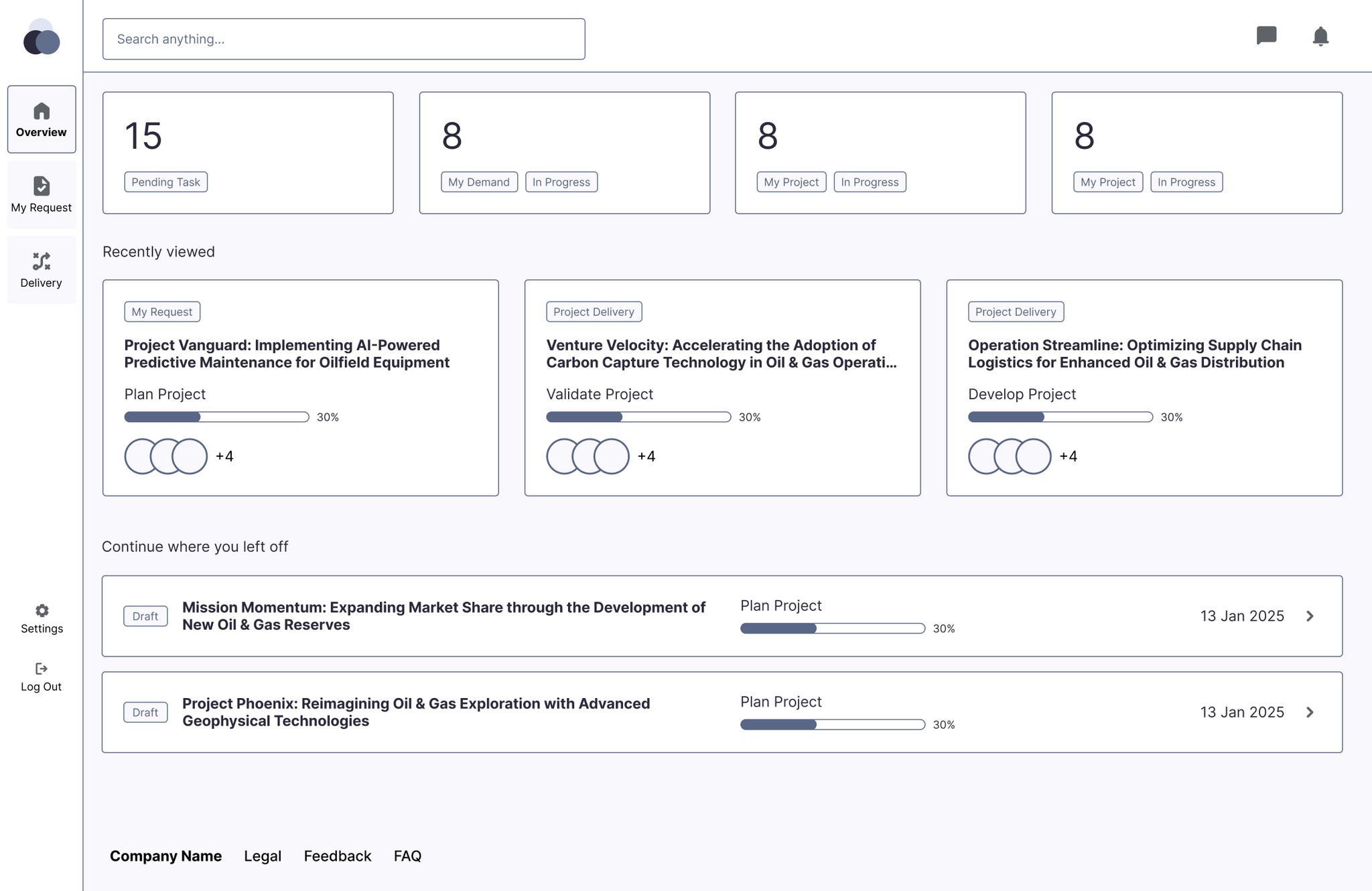
Project Overview
Amplify and contribute the UX and UI Design as a vendor for a 500 fortune company in Malaysia. The role focused on reducing inefficiencies, defining stakeholder roles, and optimizing end-to-end project initiation and delivery workflows..
Platform served 40+ internal stakeholders across multiple business units
Collaborated closely with the client’s teams in the oil & gas sector and various external vendors
Redesign scope included project demand planning, cadence management, approval workflows, and executive reporting
The Problem
The legacy system was outdated, disjointed, and heavily manual:
// Misaligned user journeys and unclear business requirements
// Overlapping roles and responsibilities
// Redundant approval loops and duplicated data entry
// Poor user experience leading to reliance on offline tools (Excel, email)
//Unscalable for onboarding new global vendors
Project Goals
Realign UX flows to stakeholder behaviors and workflows
Eliminate redundant steps and bottlenecks
Clarify role-based task assignments and visibility
Tailored Language Design System (DLS) into design.
Create scalable, repeatable UX patterns for ongoing use.
Research & Discovery
Methods
Stakeholder interviews (Business Focals, TSS, Tribe Leads)
Analyze past documentation and iterate new generation from that documentation.
Heuristic evaluation and usability audits
Journey mapping workshops with Business Analysts
Field walkthroughs on actual project submissions
Key Findings
7+ and more unnecessary steps in demand refinement
Confusing terms across departments
Frustration due to missing validation feedback and broken UI logic
Low satisfaction due to manual input, errors, and unclear progress tracking
UX Strategy & Design
Adopted a repeatable 2-week sprint cycle specificaly for designers:
Sprint Workflow
Days 1–5: Document analysis, requirement clarification, business alignment
Days 6–8: Information architecture, User Journey map, high-fidelity Figma screens using DLS
Day 9: Validation with real users (via prototype walk-throughs)
Day 10: Dev handoff with annotated specs in Azure DevOps
Also:
Weekly Handover sessions to bridge design-dev gap
Deliver Figma UI design with Dev mode incorporated.
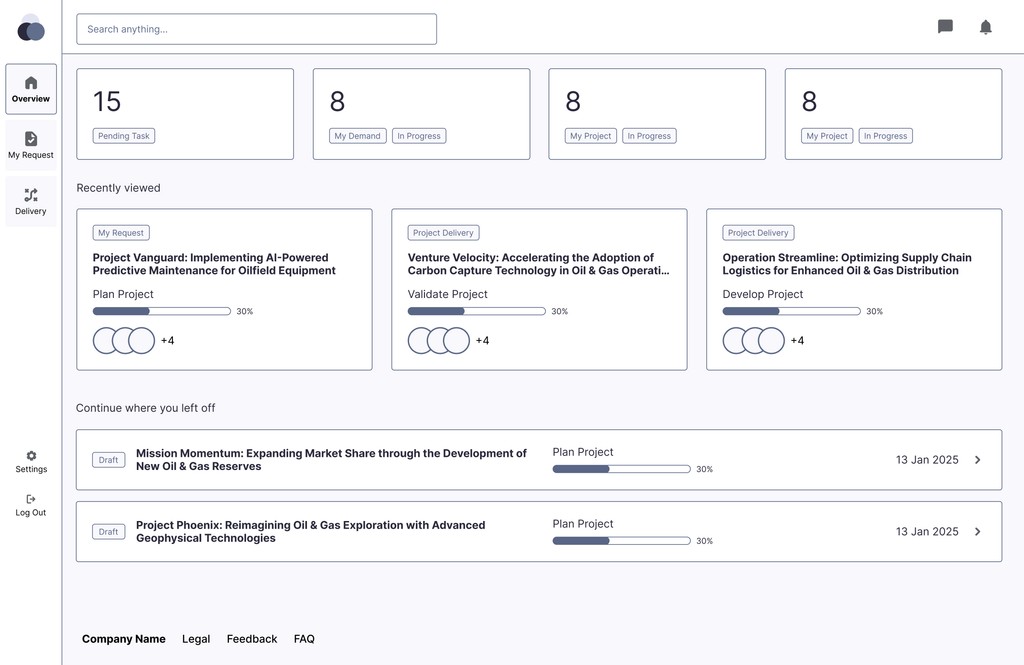
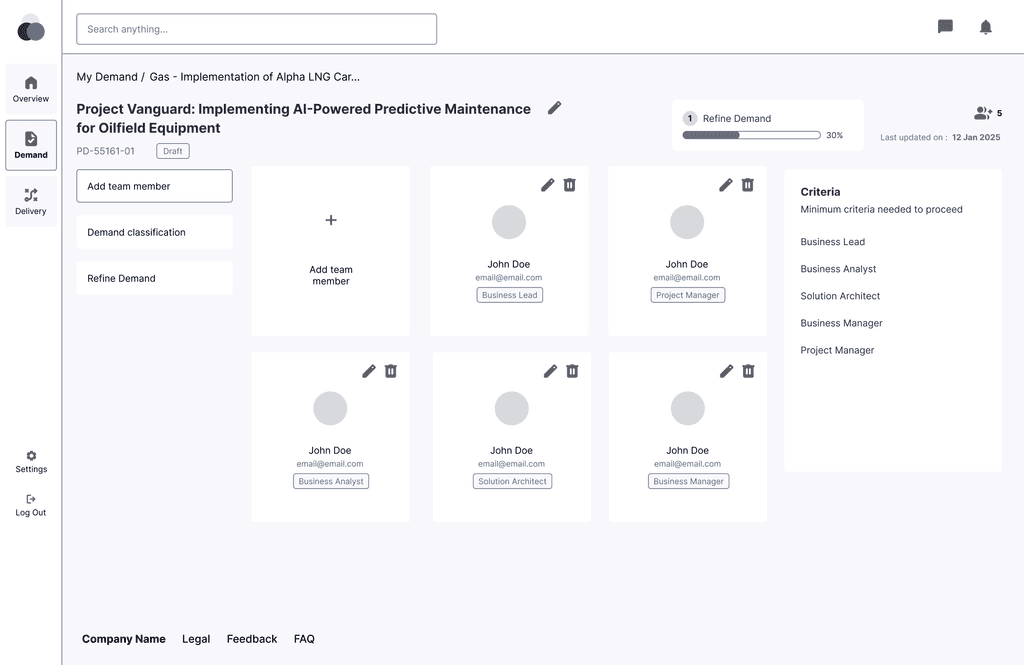
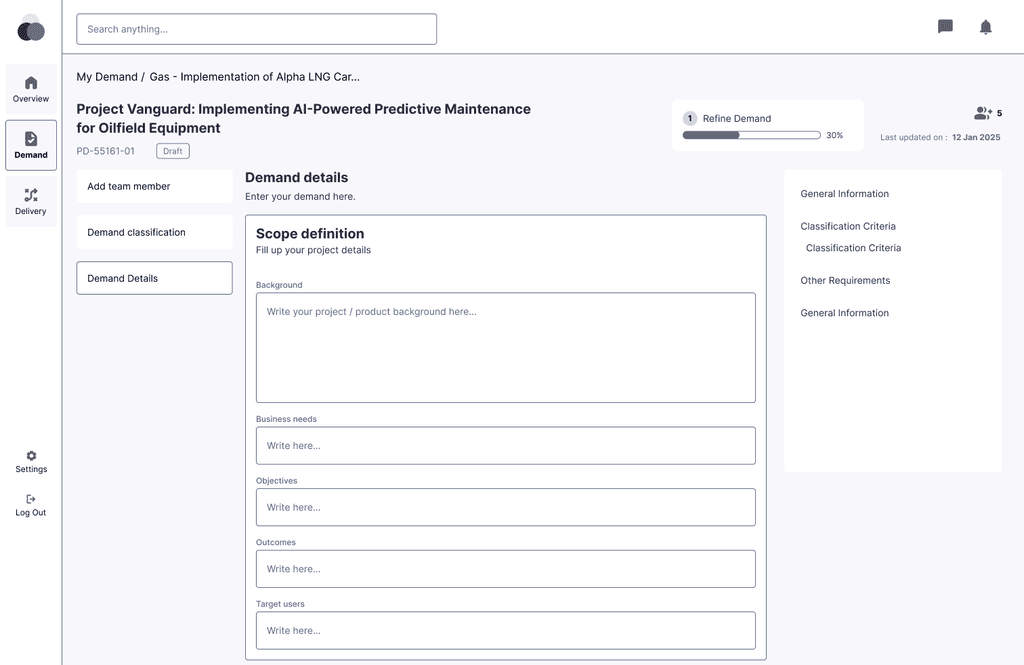
Wireframe
⚠️ Usability QA & UAT Insights
Top Pain Points Reported:
“I don’t know where the error is. Everything’s filled.”
“Where is the risk rating section? It tells me to complete it but nothing shows.”
Issues Identified
Broken navigation stepper logic
Misleading validation patterns
Visual inconsistency (input fields, button spacing)
Missing progress indication on forms
UX Fixes
Conditional logic added for key fields
Stepper UI re-engineered
DLS components reapplied for consistency
Interaction microcopy and tooltips added
📃 Key Design Contributions
Reduced 7-step initiation flow into 4 logical stages
Introduced conditional logic for Business Unit & Legal Entity inputs
Designed dynamic dropdowns for risk, budget, expenditure
Created scalable layouts for reporting dashboards and status overviews
Added inline field guidance and error feedback cues
📊 Outcome Highlights
Metric
Before
After
Project Initiation Time
3–5 days
1–2 days
Approval Delays
Frequent
↓ 60%
Design Review Cycles
6–7 rounds
3–4 rounds
Time-to-Prototype
3 weeks
1.5 weeks
Internal UX Satisfaction Score
3.1 / 5
4.2 / 5
🏆 Recognized as a Top 10 Contributor to the Client’s DLS Initiative
🔄 Lessons Learned
UX bridges the gap between business and dev. Poorly written user stories = wasted sprint cycles.
Design systems are only as strong as their enforcement. DLS was critical in scaling and consistency.
Empathy matters. Enterprise tools can still be human-friendly.
Leadership means alignment. UX leadership in the background without need of validation is about clarity, decision support, and cross-team advocacy.
🏢 Impact Summary
By understanding pain points for the internal team and stakeholders. This will solve SDLC in a matter of weeks, and can get mutual agreement faster. Reduce redundancy and more focus on delivering that make impact and results.
With the presentation of UI this will create more engagement with stakeholder to give the a glimpse what was being imagined been potreyed and proof upfront. The project was listed top 10 best project management in the company, said one of the Solution Architect